

Can We Talk About Work
Life Balance and Who Actually Gets It?

In America, true work–life balance has become a luxury good, something reserved almost exclusively for the ultra‑wealthy. For everyone else, the message is simple: keep working, keep producing, and don’t expect the system to protect you when life inevitably happens.
The Illusion of Protection
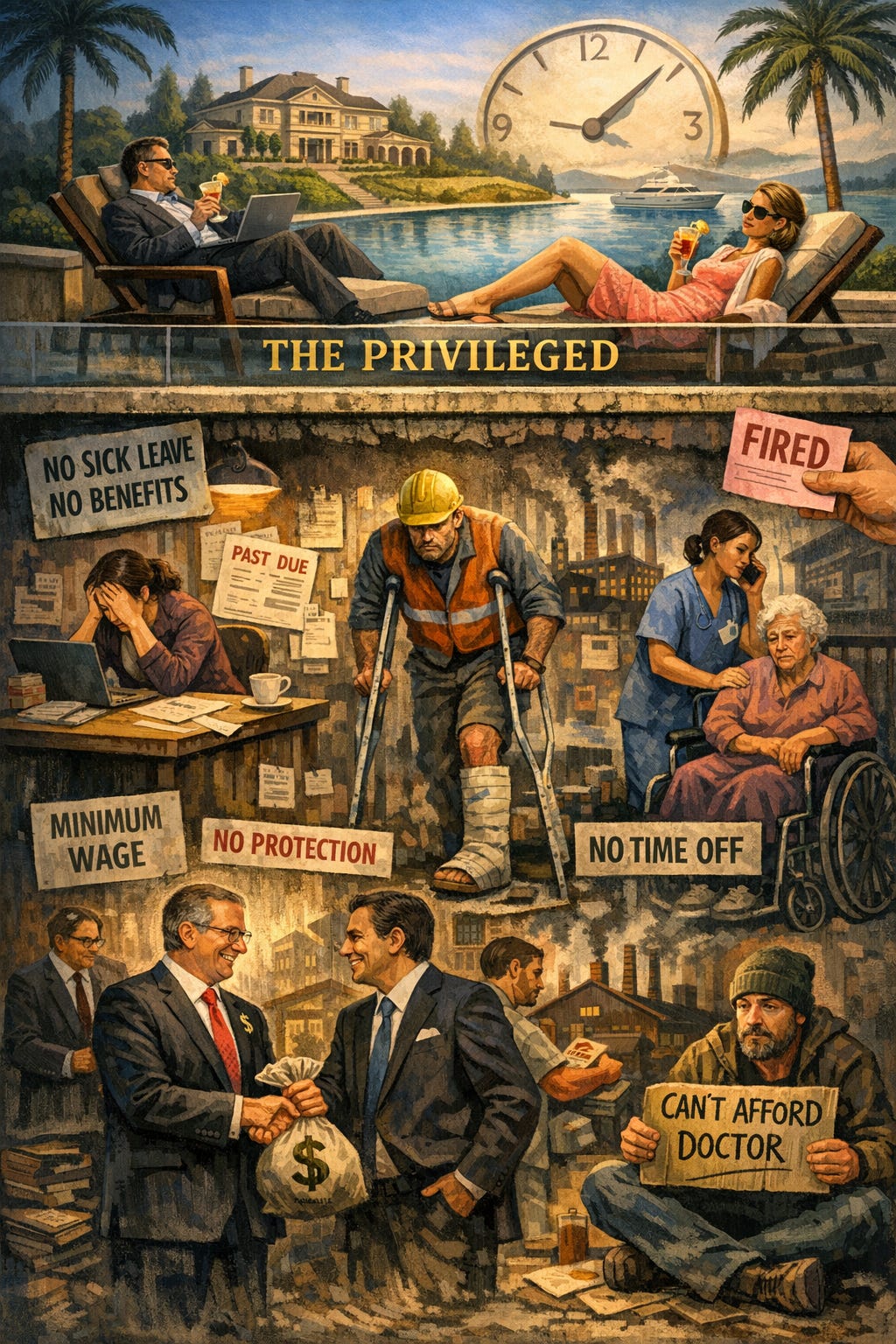
Our so‑called “protections” from discrimination or wrongful termination are shockingly thin. Under federal law, you must work at a company for a full year before you qualify for job‑protected leave. That requirement alone reveals a disturbing assumption baked into policy: that people can somehow schedule the onset of a disability, the worsening of a chronic condition, or the moment a family member becomes seriously ill.
Life does not wait for eligibility. You don’t get to choose when your body breaks down, when tragedy strikes, or when someone you love suddenly needs care. Every one of us will experience disability at some point—whether temporary or permanent—because that is simply part of being human. Yet our laws treat disability as an inconvenience rather than an inevitability.
Who Gets Left Out?
Even the Americans with Disabilities Act has a loophole big enough to swallow millions of workers: if your employer has fewer than 15 employees, you cannot bring an ADA discrimination claim against them. The message this sends is chilling—discrimination is apparently acceptable as long as the business is small enough.
Workers deserve protection from day one, not after a year, not after meeting arbitrary thresholds, and not only if their employer is large enough to count.
How Did We Get Here?
Policies like these don’t appear out of nowhere. They come from electing people who do not share the lived experiences of the average worker. Many lawmakers have significant financial interests in businesses that benefit from weak labor protections. When those in power profit from the status quo, the suffering of ordinary people becomes an acceptable cost.
Meanwhile, public attention is constantly redirected toward blaming the person making $7.25 an hour instead of examining the systems that keep wages low, benefits scarce, and protections minimal.
What Comes Next?
If you’re tired of watching a political and economic elite shape a society that leaves most people exhausted, unprotected, and one crisis away from disaster, you’re not alone. These issues won’t change unless voters demand representatives who prioritize the well‑being of workers over corporate convenience.
Early voting in Indiana is already underway, and Election Day is May 5, 2026. Make a plan, show up, and make your voice heard.
If you want to follow more discussions like this—or if you’re interested in hearing perspectives on the upcoming primaries in Indiana—subscribe to the channel and join the conversation.
Well said!